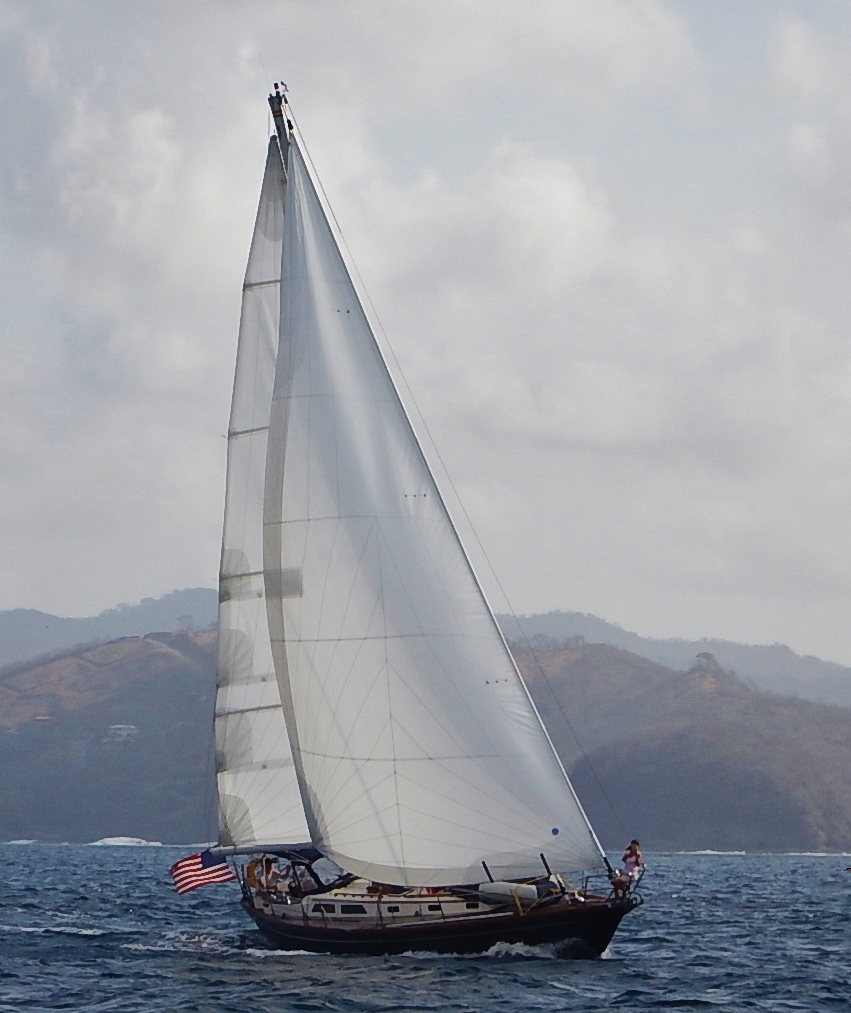
Showing posts with label Sailing. Show all posts

Saturday, August 11, 2018

A Boat Delivery

Boaters often use normal words in odd ways, and the word "delivery" is just one example. To landlubbers it might mean having a baby, but boaters understand it as a fast, non-stop trip to move a boat from Point A to Point B.

And that's pretty much what we've done.


We've moved Thistle to Annapolis to put her up for sale.

Good weather windows are scarce during East Coast summers, but we saw a gap in the thunderstorms and went for it. We left Brunswick, Georgia on Saturday, August 4th, at 7:00am and dropped anchor here in Annapolis, Maryland Friday at 7:00am.

Our first leg was a fifty-one hour ocean passage from Brunswick to Beaufort, North Carolina. We decided to go up the ICW from there, and after a quick stop at the fuel dock, we headed north towards the Neuse River. By 6:30pm Monday evening we were anchored in Goose Creek, poised for Pamlico Sound the next day.

Tuesday's run took us across the Pamlico and up into the Pungo-Alligator Canal. This man-made canal is bordered by nature preserves, giving boaters a chance to see deer, bears, ospreys, and eagles. We saw deer, lots of birds, and hundreds of dragonflies, but no other boats.


After a rainy trip across the Albermarle, we anchored near Elizabeth City for the night. Leaving Elizabeth City Wednesday morning, we went through my favorite part of the ICW: the upper Pasqoutank River. Its narrow twists and turns between old growth forests of bald cypress, tupelo, maple, and pine trees is almost primeval. Again, we saw no other boats along the way.

Eventually the Pasquotank turns into the Dismal Canal. You know you've arrived when you see the lock gates blocking your way.

First you contact the lockkeeper on VHF 13 and let him know you'll be there for one of the four opening times: 8:30am, 11:00am, 1:30pm, or 3:30pm. We were early so we just touched the bottom with our anchor to hold us in position.


After opening the gates and waiting for you to enter, the lockkeeper takes your lines and loops them around the yellow bollards. Then he closes the lock gates, opens the upper doors to flood the chamber, and watches you raise about 8'. Then he opens the upper gates and you motor into the historic Dismal Swamp Canal. No need to hurry, the lockkeeper still has to drive 2000' to a bridge and open that for you too.


The water level in the canal had been inadvertantly lowered by almost a foot, so we banged and bumped along for almost four hours, hitting numerous submerged logs and branches. Then we did the whole bridge/lock thing again, lowering Thistle 8' down into Deep Creek.

Deep Creek connects to the Elizabeth River and ultimately Norfolk Harbor and Mile Zero of the ICW. We anchored for the night at Hospital Cove.

Early Thursday morning we lifted the anchor, washed off the mud of Norfolk, and headed north up the Chesapeake Bay. We saw plenty of boat traffic all day and night; mainly tugs pushing barges and anchored cargo ships. Thanks to modern electronics we know the speed and heading of these commercial vessels, but more importantly, we know their names so we can call them on VHF 13 if there's a conflict. Only two required a small course change, but they sure appreciated our co-operation.


Here's a shot of our chartplotter coming into Annapolis in the dark Friday morning. You can see five ships, but four of them are anchored, so we wove our way between them and into the channel, finally dropping our anchor in Back Creek just before 7am.

Six days, 577 nautical miles, three anchorages, two locks, five bridges to contact for opening, and 200 dead Chesapeake biting flies in the cockpit; all things considered, it was a pretty easy delivery.


Tuesday, September 12, 2017

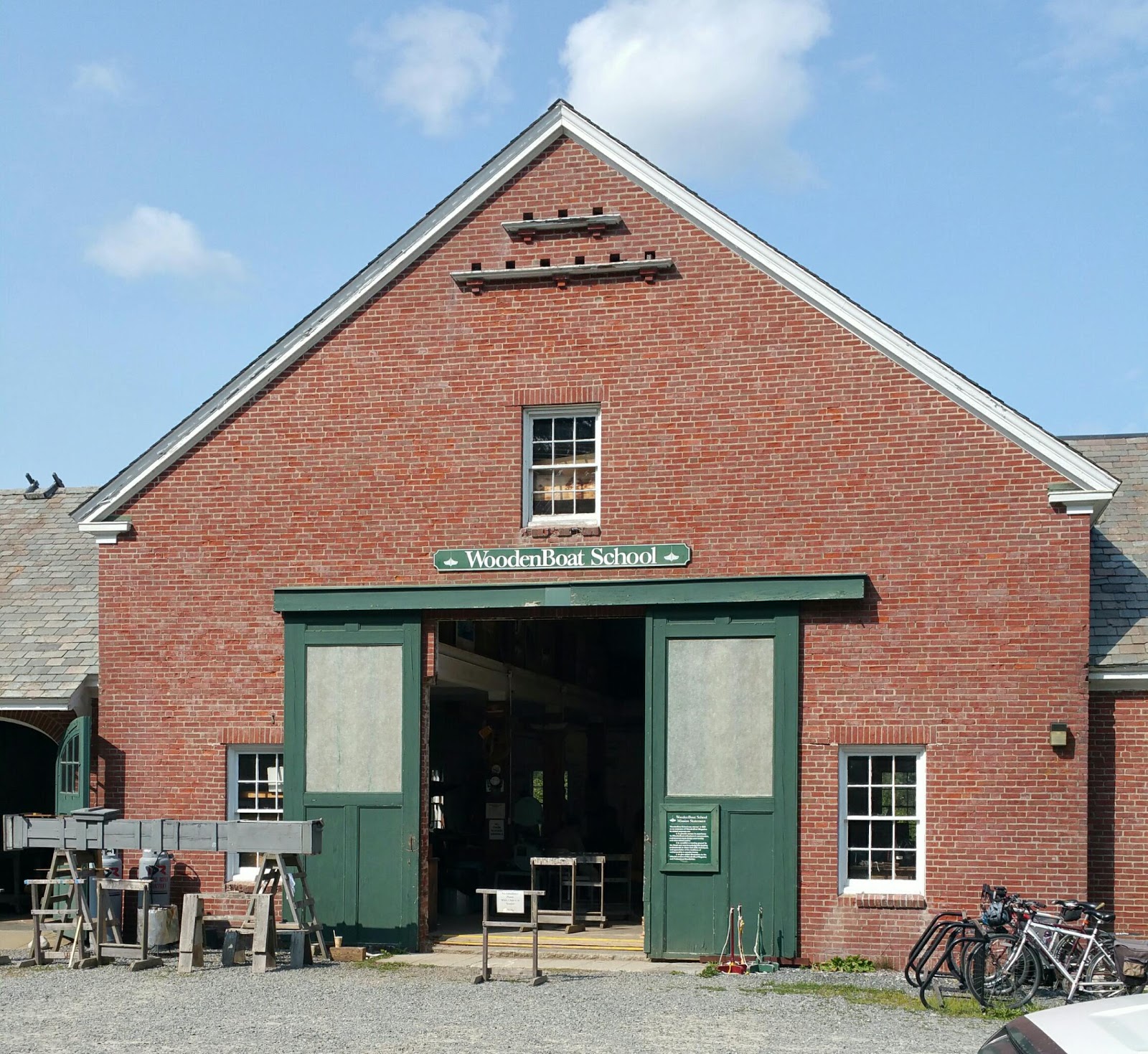
Wooden Boat School

Just west of Mount Desert Island in Brooklin, Maine, is the Wooden Boat School and magazine headquarters. Back in the 1980s we owned and refurbished a 1947 Laurent Giles sloop named Tilly Whim. We subscribed to the magazine and enjoyed it for many years, so we thought a visit was in order.
We anchored close to their dock there in Eggemoggin Reach, and walked up to the store and school. I heard that one of sailing's icons, Lin Pardey, was there just the day before. We bought several of their books back in the 1980s and even anchored next to Taleisin once at beautiful Isla Partida in the Sea of Cortez.
The school is in a beautiful old brick barn, but they don't allow visitors inside. We finally walked back to the dinghy dock and went back to our boat. We saw some nice boats in the harbor, and I got a really nice photo of this thistle, so the day wasn't a total bust. 

Friday, June 9, 2017

A Rare Day

As full time liveaboard cruisers, we obviously move a lot. Some days it's just a lot of motoring, some days it's cold, rough, and wet, some days it's drive-you-crazy rolly, but on some very rare days the stars all align and it's a beautiful sail.

Today is one of those rare days.

We left Solomons Island early this morning with the sunrise to port and the moonset to starboard. We had omelets for breakfast as we motored out of the channel, then hoisted the sails and turned off the engine.

We are now making 5.7 kts in calm seas heading right up the Chesapeake Bay. Thistle is performing perfectly, the shaft seal is not dripping, and the autopilot is steering. A rare day indeed, and sorely needed.

We'll mark this one on the calendar.

Saturday, February 27, 2016

Adix Under Sail

James said he'd like to see this boat under sail so I found this on the Internet.

Sunday, January 31, 2016

On the Way to Guadeloupe

We awoke at 6:00 am, hurried through our pre-sail checklist, and bid "Adieu" to Pain de Sucre at 6:30 so I could take my sunrise photo at sea. Just north of Îlet de Cabrit the sun appeared above Terre de Haut and we witnessed this beautiful sunrise.
 
We enjoyed a relaxing three hour sail, but when we reached the approach to Pointe à Pitre channel, the crew's tension level spiked because the outer channel markers shown on our chartplotter simply weren't there. The approach is riddled with shoals and reefs, and not knowing exactly where you are is dangerous, but by using the depth contours on our chartplotter, our depth sounder, our eyes, and some common sense, we found the two most important buoys: Green PP8 and Red PP3. These buoys are two miles offshore, and funnel traffic between the two shallowest shoals and into Pointe à Pitre's channel.
 
Once inside the river, which isn't really a river at all but rather a mangrove-lined cut between the two islands that form Guadeloupe, the channel was easy to follow and we anchored near Marina Bas-du-Fort.
 
With the ships, tugs, sailboats, fishing boats, speed boats, jet skis, and sailing students all jockeying for position in the channel, this river reminds us of our home waters on the San Joaquin River Delta. Back home it's not uncommon to have a bass tournament,  a sailboat race, and a tanker all sharing the channel at the same time.

 
Pointe à Pitre has one of the best yachting centers in the Leeward Islands and the marina has dock space for over 1000 boats. There are all kinds of services, restaurants, and things to see and do. There are ferries to the  neighboring islands and cruise ships visit regularly. We just hope to find a new propeller for our outboard. It "spun its hub" not long ago and the Captain jury rigged it, but we don't want to use it like this forever.

Oh, we found all those missing buoys. They're here on dry land awaiting refurbishing, I imagine.

Tuesday, January 19, 2016

One Order of Reality and Hold The Sugar Coating

I recently saw a comment somewhere about how some cruising blogs "sugar coat" the cruising life. And while some cruisers probably do focus only on the gorgeous beaches, perfect sailing weather, and idyllic anchorages, that's not the reality of living on and cruising a boat 24/7/365, and that's certainly not what we do here on Fortunes Afloat.
 
 
I once posted a video of us sailing into Bahia Banderas in perfect conditions and said something about how if it were like that every day, then everyone would be cruising. One commenter said, "I don't understand, that's exactly like cruising."
 
 
I nearly spewed my coffee reading that comment because cruising is RARELY a smooth daysail in 15 knot winds. And when it is, we celebrate it. We mark it on our calendars. We bore people to death talking about it. I could count on one hand the perfect daysails we've had in our 15 months and 6500 miles of cruising.
 
Mainly long distance cruising is like this: not enough wind, too much wind, rain, squalls, thunderstorms, adverse currents, headwinds, big waves, washing machine waves, salt everywhere, and trying to sleep while rolling from side to side. It's the ocean for goodness sake - it's lumpy! If you're having pleasant, smooth daysails, please tell me where you are because I need to go there!


There are also anchorages so rolley stuff flies off counters, nights when the wind shrieks through the rigging, bugs, heat, humidity, thunderstorms, lightning, unlit fishing boats, rocks, reefs, and missing buoys.
 
Sure, I show you some beautiful places and interesting shore excursions, but I also show you water pumps being rebuilt, heads being repaired, and leaky hydraulics because maintenance is a fact of life on a cruising boat. It's a constant, ongoing process to keep the ocean from destroying your boat. There's always corrosion to fight, filters to clean, varnish to touch up, oil to change, stainless to clean, canvas to mend, and salt to wipe off. And you know what? That's not very exciting to read about, so normally we just do the maintenance without comment and move on to the fun part.
 
Because honestly, that's why we're out here! To have an adventure, visit foreign countries, meet new people, and see new sights! We may not show all the nitty gritty realities of cruising life in every post, but you can be sure it's happening behind the scenes. You'd probably get bored anyway if I posted about changing the oil again, filling the propane tank again, jerry jugging diesel again, schlepping groceries and laundry again, doing paperwork again, and cleaning the strainers again. So, yes, we sometimes focus on the fun parts, but isn't that what everyone does?
 
Doesn't everyone look forward to their vacation as they slog through their daily grind?
 
Doesn't everyone anticipate a lovely weekend away from their humdrum routine?
 
Don't we all want to see something new now and then?
 
I know I do, and I hope you do too.
 

ps: We spent several hours in the Princess Margaret Hospital today getting the Captain's gallbladder checked out. (He was awake all night in excruciating pain.) They ended up giving him some pain meds, doing some blood work to rule out liver and heart issues, and recommending an ultrasound to see if he has gallstones. And then they charged us four times what a Dominican citizen would pay. Sugar coated? Not this blog.

Friday, December 11, 2015

Kick-em Jenny


Today on our 30 mile sail from Grenada to Carriacou we saw all kinds of weather and interesting natural phenomenon. It started out rather damp and dreary with almost no wind. Then we had a nice rainbow arcing right over Seahorse V.

I kept telling myself that soon they would sail to the end of it and I would get a fabulous photo, but that never happened. What was the error in my thinking? Can anyone guess? *

After passing the north end of Grenada, we punched out across the channel and then sailed right next to the underwater volcano called Kick-em Jenny. Although we saw other boats sail directly through the exclusion zone, we decided to play it safe and we're glad we did because I swear we sailed through some bubbles that came from vents. We both looked at each other and said, "What was that?!" as we passed through the light blue bubbly water. Creepy, especially when you read about how those bubbles can affect boats.

Learn more here: http://www.allatsea.net/grenadas-underwater-volcano-kick-em-jenny-stirs/

By that time the wind had freshened and we were under double reefed main and the staysail, but it was still a pleasant sail. We anchored in Tyrell Bay on the island of Carriacou at 1:00 pm just in time for a late lunch and a nap. And I'm just glad the volcano didn't do this today.

*Here's why I would never have gotten a photo of Seahorse V at the end of the rainbow: The rainbow isn't a solid object, it's just light refracting through water. My view of it "moves" as I move therefore Seahorse V would never get to the end of it unless I were to stop and/or change my position relative to them.

Monday, October 26, 2015

Our Passage From Cartagena To Aruba

 Or The Ugly, The Bad, and The Good
(because I always like to finish on a positive note)


Well, we did it; we made the four day, 420 mile (should have been 380, but we tacked a lot) upwind passage from Cartagena to Aruba. Some said we couldn't do it, and sailors say this is one of the worst passages in the world and I know why now. We started with a nice five day weather window though, and things worked out pretty good for us.


LET’S START WITH THE UGLY

The worst thing about this passage was the sea conditions. This sea is nothing like the Pacific with its long gentle swells. The waves are much closer together here and seem to come from everywhere at once. Add to that the strong current that flows around Peninsula de Guajira towards Cartagena, and you have very confused seas. Several times on this passage we would be bashing along and a wave would sneak up and slam us from the side, soaking the whole boat in gallons and gallons of water and sending some down the open companionway. Normally, this doesn’t happen because we have a spray dodger over the companionway and the spray is usually coming from the front of the boat. We have another hatch between the main companionway and the mast that has its own little dodger, and water even splashed in there. These conditions make every movement or task a carefully choreographed affair, but even with forethought, surprises happen and we have bruises on bruises. This morning when I woke up I felt like I had been in a bar fight. Not that I’ve ever been in a bar fight, but I imagine that’s how one would feel the next morning.


THEN THERE WAS THE BAD

We should have put more time into calibrating the autopilot. After we installed it in Cartagena we spent at least two hours calibrating it, but during this passage it wasn’t always able to hold a course to our satisfaction especially when we made any kind of sail adjustment. We quickly learned to disengage it, set our new course manually, then re-engage it.

We also should have spent some time plugging all the holes in the foredeck. Every boat has some holes in the foredeck; you need to access anchor chains and rodes somehow. We have two hawse pipes, one hole where the anchor chain goes through the windlass, and fourth hole through a belowdeck anchor well. We have gone to weather before, but never with so much green water constantly over the bow. Needless to say, it was a downpour in the anchor locker…..which is below the water line so it has no drain…..and it flows into the bilges……which were awash when the bilge pump finally said, “Nope, not gonna do it any longer!”  We discovered that the strainer was totally clogged. There isn’t anything much more fun than taking things apart underway, but we disassembled the strainer, cleaned out lots of gunk, put it back together and pumped out all the water. Then I crawled into the anchor locker and stuffed pieces of pool noodle into all the holes while salt water rained down on my head and the boat thrashed me around like a mechanical bull. Great fun.

Our third issue was with fuel filters. There is nothing like pounding to windward to stir up all the gunk in your tanks and clog your filters. So the second day found us fixing stuff underway again, but for this repair we hove to. (For my landlubber audience, that is when you begin to tack, but don’t pull the jib across to the other side. The boat tries to move forward because the mainsail is full, but it can’t because the jib is backwinded, so basically the boat just bobs in place, slowly drifting downwind and the ride is so much calmer.)  Under these calmer conditions we removed all the filters, cleaned the strainers, installed new filters, primed the system, and got things running again. Thankfully, we had the tools, the spares, and the stomachs to do this.


AND FINALLY THE GOOD

In the end, we had good weather, none of our portholes or hatches leaked, we ate well, had no injuries or sickness, had no really serious mechanical problems, and we had our buddy boat, Seahorse V, right next to us. When we arrived at the Customs Dock in Aruba, we had a little impromptu party in our cockpit as we celebrated the successful completion of this difficult passage. We drank adult beverages before noon and we didn’t feel guilty at all. And then after we had moved to the anchorage, Aruba greeted us with a strong squall that washed all the salt off our boat. So we can already check one thing off the “after passage” chore list. Thank you Aruba!


Sunday, June 14, 2015

New Header

I created a new header from a photo Sheila took of us back in April as we sailed towards Bahia Santa Maria. It was a nice day and she got several good shots of us. I don't have Photoshop on my laptop, so I had to use an online version and it took me forever to get it done. The online version doesn't use keystrokes like I prefer, but I eventually got it figured out.


Tuesday, April 14, 2015

A Different Kind of Life

Some of you may think this sailing life we are living right now is glamorous and carefree. Some of you may think it is scary. Some of you may think it is just plain crazy. And all of you may be right (from your perspective), but we have found that it's none of those things at all.
 
 
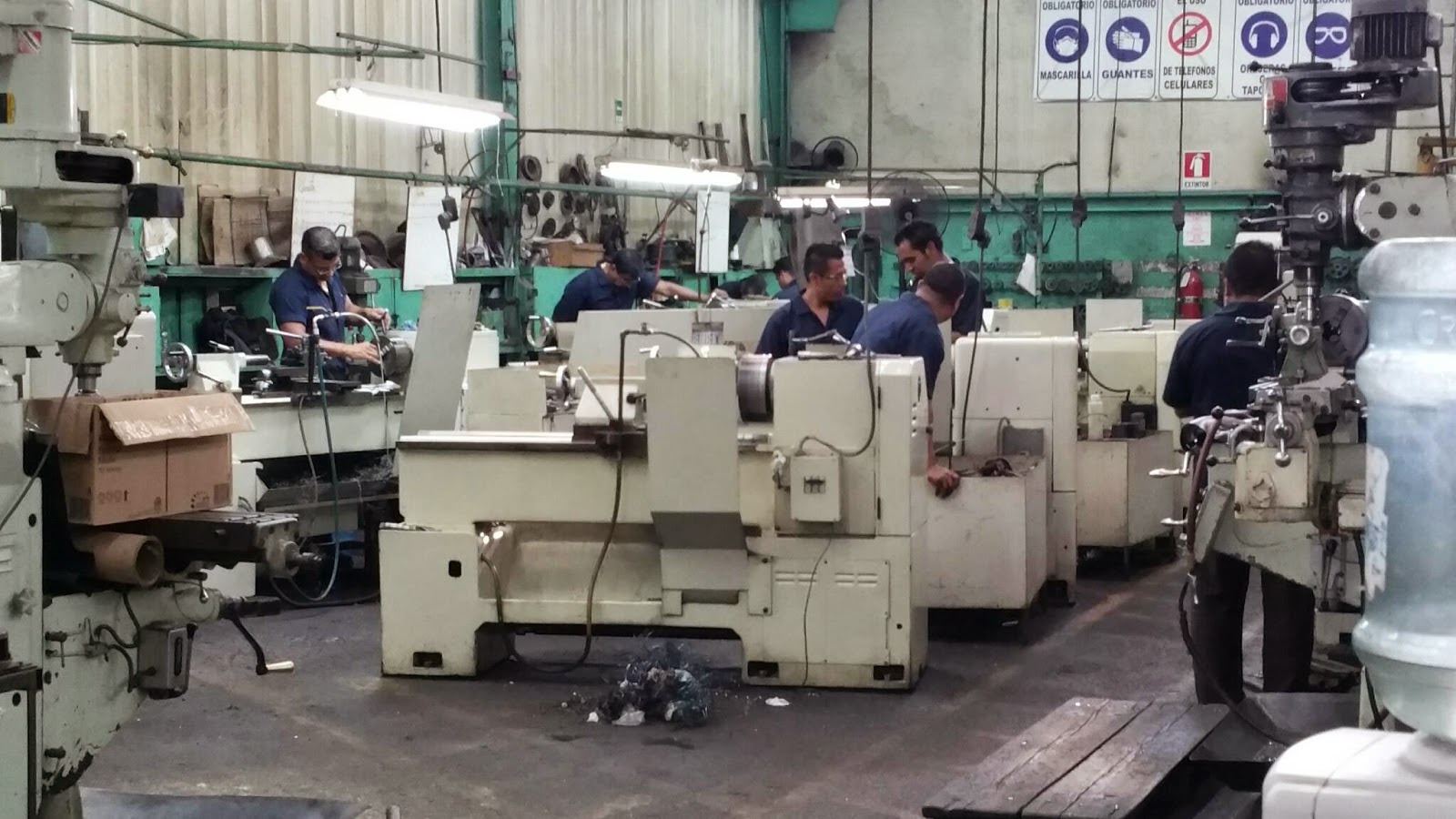
It certainly isn't glamorous or carefree. We sometimes go days without a proper night's sleep or a hot shower. We frequently wear worn and grubby, salt-stained clothes. We often eat strange foods and shop in drab little tiendas. Everything we do is affected by the tides and the weather. We do all our own maintenance and repairs which frequently requires hours spent in places like this. Glamorous? Carefree? Not so much.


It's not that scary. The scariest times have been running across unlit fishing boats on night watches. (Oh, and hitting a whale. I guess I neglected to tell you about that, but it was a gentle nudge and we apologized profusely.) We haven't seen any storms, pirates, or sea monsters, and sailing through Mexico and Central America has been relatively easy and stress-free.
 
 
If it's crazy, then there are a lot of other crazy folks out here too, but they sure seem normal to us. They are helpful and kind and willing to lend a hand, a tool, food, supplies, or a shoulder to cry on. They are thoughtful, cautious folks too. They research the weather, harbors, and maintenance issues and are willing to share that knowledge with you. After all, their boat represents a large investment and is frequently their only home, so they aren't going to take chances with it. They may be adventurous, but they aren't crazy.
 
We have found the sailing life to be busy yet peaceful, challenging yet rewarding, wacky yet satisfying. We tackle each passage and each day not knowing what it will bring, but open to change and new adventures, often finding at the end of the day that we have had wonderful experiences along the way. 
 

Thursday, April 9, 2015

Goodbye to El Salvador

It's time to say Goodbye to El Salvador and move south again.
We will go across the bar at 7:00am tomorrow morning. Hopefully we will be sailing like this in a clean ocean with a dolphin at the bow and fresh air again. We can hardly wait. Thanks to Seahorse V for the photo.

Saturday, March 28, 2015

Weird Things Cruisers Do

Your priorities change when you start cruising full time. It's just not the same as weekend sailing, racing, or living aboard at the dock. I saw a link on Seven Seas Cruising Association's site with a long list of weird things we all do and some of them made me laugh out loud. I picked out a few of my favorites and I'll try to explain them to my landlubber audience.


You've read 240 books in the past year and only bought one.
     This is because at every harbor there is a book exchange where you just take a few and leave a few. It works
     wonderfully well and allows you to try all kinds of books at no expense.

You anchor near the hotels in case they have free wifi you can pick up from on board.
     We have also gone to beach palapas and had a snack and drink just to get their wifi code. Then we go back
      to the boat and bootleg it with our booster. If I didn't do that, how could I upload these scintillating posts?

You haven’t heard the news in weeks, and don’t care.
      News, what news? Ask me what's happening in the fleet, though, and I've got that covered. 

You have friends whose surnames you don’t know and boat names you’ll never forget.
      You make friends quickly out here and what's important is their first names and their boat names and how much
      chain they have out.

The first thing you ask is, “Where is the supermarket, the laundry, and the chandlery? ”
      When you arrive in a new harbor after a passage, you need all those services and have no idea where they are.
      Luckily the fleet is happy to help, just as someone helped them when they arrived.
 
As cruisers we know we're weird, and probably smell funny, and lack a little in the personal grooming department, and schlep stuff around like sherpas, but we are loving this life and wouldn't trade it for anything.

Monday, March 16, 2015

Crossing the Bar at Bahia del Sol

The bar at Bahia del Sol has a well deserved reputation. Twice a day the tide exchanges millions of gallons of water into and out of the Estero de Jaltepeque. Over the years, sediment from the estuary has formed a wide shallow bar. All that water combined with the shallow depths and the long swell of the Pacific Ocean creates huge waves. But at slack water, with a knowledgeable guide, good luck, and nerves of steel, one can make it safely across.

In this photo you can actually see the greyish sand of the bar. The water (even at high tide) is only 10 feet deep where you see the breakers. Further in, in the narrow part of the mouth, the water is 50 feet deep. I managed to capture this screen shot as we started into the waves. We are the little blue dot.

The Pilot Boat
 

All four boats in our group arrived at the staging point for crossing the bar at 7am Saturday morning. We called the pilot on the radio then bobbed around for an hour waiting. High slack water was at 8:20am and they absolutely will not take you across any sooner. We spent our time doing final stowing, eating breakfast, and closing up the boat. They recommend that you close all hatches, portholes, and companionways. And stow everything inside the boat, and lash everything down on deck. Our boat hasn't been this tidy since we sailed out under the Golden Gate.

Delphinia catching their first swell with Thistle and Velvet Sky in the background
 
As we sat out there watching the waves pound across the bar I think we all got a little apprehensive. But the pilot has done this hundreds of times with very few problems and once the process starts, there's no backing out! Delphinia went first and then Seahorse V went and ten minutes later Velvet Sky. It all happens pretty quickly.
 
Seahorse V with a big wave coming up behind them
 
Velvet Sky starting to surf
At 8:40 it was finally our turn. The pilot boat comes out beyond the breakers and has you get close to them. Then they wait for the right "set" of waves and tell you to gun the engine and keep close to them. We did exactly as they instructed and had two swells pass under us. Although we saw depths of less than 10 feet, we handled the swells easily. The third one was a big wave though and we surfed down the face of it at 12 knots! It was very exciting and we hooted with joy to be safely across the bar.
Thistle surfing at 12 knots
 
It takes about 20 minutes to motor up the estuary to the marina and when you get there people tie up your lines and the marina staff hands you a Rum and Coke! What a welcome. The officials are there too and everyone is so friendly and welcoming. Then all eleven of us (four couples and three kids) trouped up to the office to do the official paperwork. That office was jumping as we all talked at once and compared our experiences crossing the bar.
 

Thursday, March 5, 2015

Safely Across the Gulf of Tehuantepec

We arrived this morning about 8:00 am in company with Velvet Sky, Seahorse V, Delphini, Cockpit, and Mohini. A very uneventful crossing. More later when we find dependable Internet.

Tuesday, March 3, 2015

Fleet of Six Crossing the Tehuantepec

Since we arrived here in the harbor on Friday, three other boats have come in so it looks like we will have a fleet of six for our crossing this afternoon: Thistle, Delphinia, Velvet Sky, Mohini, Cockpit, and Seahorse V. We have a nice 2 1/2 day window for the 250 mile distance, so if we maintain 6 knots we will arrive in Chiapas on Thursday morning; well within our window.
 
These are the conditions we want for the crossing
 
Since we have arrived here we have washed the boat, checked the weather, topped up the diesel, checked the weather, reprovisioned, checked the weather, put a new capacitor on the refrigeration unit, checked the weather, folded up the dinghy and put it in the lazarette, checked the weather, had our laundry done, and checked the weather. Can you tell what's foremost on our minds? But you know what? The other five boats are doing exactly the same thing.

These are the conditions we DON'T want for the crossing

Friday, February 27, 2015

At the Marina Chahue

We left Acapulco on Tuesday February 24th around 10:15am. After motoring out of the bay, we were able to turn the motor off at 11:00am and had a very nice sail in 8-12 knot winds for many hours. We ran out of wind around 10:00pm so we turned on the engine again until 9:00am when we had enough wind to sail again. And sail we did! We were eventually flying along at 8 knots for several hours until we decided we were going too fast and needed to slow down so we wouldn't arrive in port in the dark. We put the main away and continued on with half our genoa out.
We arrived at Bahia Santa Cruz at 7:00am and slowly made our way around the reef and anchored behind Punta Rosas where we got cleaned up, had some breakfast, and took naps. We spent the night there after making arrangements to come into the marina Friday morning. And here we are now at Marina Chahue. It's a very nice marina with beautiful docks, electricity, potable water, an English speaking harbormaster, and Internet.
The old girl looks pretty good after sailing 2500 miles to get here, doesn't she?

Monday, December 15, 2014

Approaching La Cruz

If every passage was like this, everyone would be out cruising. Sliding along at 6-7 knots in 12-17 knots of wind. Lovely!


Tuesday, December 9, 2014

Wednesday, September 3, 2014